


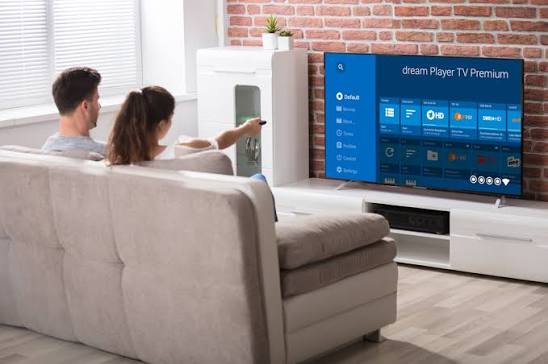
A television player should be comfortable to use from the sofa with the remote that actually lives in the room. An interface that looks tidy on a phone can be awkward when text is small or navigation requires a pointer. Before following setup information from https://dream4kiptv.net/, consider the everyday tasks the household needs to perform. Preparing a remote friendly arrangement means checking installation, readable screens and predictable navigation on the specific device, while keeping the player separate from the service account.
Start with the real remote control
Identify the remote the household will use, including any limited set of buttons or accessibility controls. Do not assume that a touchscreen gesture in a guide has an equivalent on the television. In an illustrative household, Mara shares a television with her father, who prefers a directional pad and a clear back button. Their setup should be assessed with that remote in hand, not with a keyboard temporarily attached for installation. Write down the common tasks: open the player, select a category, return to the previous screen and stop playback. Those tasks provide a useful basis for judging whether navigation makes sense in the room where viewing will happen.
Confirm the exact television platform
Find the television or connected device model and its platform information through the manufacturer’s documented menus. A brand name alone may not identify the application environment. Review the current Dream 4K IPTV apps information alongside that device identity, and ask for clarification where the relevant model or app version is unclear. Do not generalize compatibility from a similar looking television or a player running on another platform. If the application is not available through the documented route, pause rather than following an unrelated download link. The installation source and product identity matter before anyone considers whether the interface is convenient. A readable menu is useful only after the household knows which application it is installing.
Keep account entry private and deliberate
Installation may require typing, but that is a separate task from ordinary remote use. Follow the documented account entry method for the actual player and service arrangement. Avoid exposing credentials on a shared screen during a public demonstration or sending a full access link in a group chat. Ask which product a payment or activation prompt belongs to before proceeding. A player licence may be separate from service access. Mara can prepare the nonsecret account reference and support contact in a private household note while storing credentials appropriately elsewhere. Once entry is complete, check that the next viewer can use normal navigation without needing to repeat the sensitive setup process.
Read the screen from the viewing position
Sit where the household normally watches and examine the labels, selected item and any error message. Small text that looks acceptable close to the screen may be difficult from the sofa. Check whether the actual device or application offers documented text or display preferences; do not promise controls that are not present. Consider whether the selected item is visually distinguishable and whether the menu shows enough context to know where you are. If an adjustment is available, change one thing and review the result. Mara’s father should be able to identify the highlighted choice without someone narrating every move. That practical observation matters more than the attractiveness of a promotional screenshot.
Walk through a complete ordinary task
Try a familiar sequence from opening the application to returning to its starting screen. Notice whether the remote’s back action behaves as expected and whether leaving playback returns to a useful place. Do not assume a particular player function; observe the version installed on the device. If the household gets lost, note the screen and action rather than concluding that the whole application is unusable. A short practice session can reveal which instruction belongs in a household handover. Avoid changing advanced settings simply to improve an unfamiliar menu. First establish whether the apparent problem is an unknown navigation step, a device limitation or a control that the application actually provides.
Use installation guidance within its scope
The Dream 4K IPTV device installation guidance is a relevant resource for considering application selection and setup questions. Compare its device and version scope with your own before following steps. If a menu label differs, pause at that point and seek the correct instruction. Do not treat a guide’s screenshots as proof of compatibility or assume that a described feature belongs to the service account. Keep the article reference in your notes so that support can understand the route you followed. For Mara’s household, the most useful outcome might be a verified installation and three clear navigation instructions. A long collection of unrelated tips would make the handover harder to use rather than more complete.
Simplify only with documented controls
If the player offers relevant preferences, consider whether they reduce unnecessary choices for the household. Ask how favourites, hidden categories or interface changes behave before relying on them. A display preference should not be described as a change to billing or underlying entitlement. Likewise, a simplified screen is not automatically a restriction that applies across every device. Keep the original arrangement understandable in case a preference needs reversing. Mara might write a short note explaining where a chosen category can be found, without removing anything at all. The aim is predictable use with the available controls, not a complicated customization project that leaves the next viewer dependent on the person who configured it.
Store the handover where viewers can find it, and date it so an old instruction can be recognized when the television interface changes.
Leave a short household handover
Finish with the remote actions that matter, the player name and the appropriate route for help. Keep passwords out of the handover. Mention any task that still requires assistance rather than claiming the setup is suitable for everyone. Ask the intended viewer to repeat a normal navigation sequence, and record any unresolved difficulty. If an update later changes the interface, review those instructions against the actual screen. A remote friendly setup is an ongoing fit between a device, an application and the people using them. Preparing that fit carefully makes the television easier to share and makes future support questions more specific, without inventing compatibility or promising features that have not been confirmed.
