


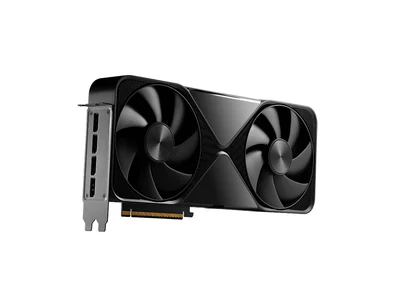
In today’s era of artificial intelligence, advanced visualization, and data‑driven decision-making, the demand for powerful computing hardware has never been greater. Professionals in AI development, scientific computing, media creation, architectural design, engineering, and enterprise research require hardware that not only delivers raw performance but also scales efficiently, integrates seamlessly, and supports complex workloads.
Enter the NVIDIA RTX PRO 6000 Blackwell, a groundbreaking professional GPU designed to meet and exceed these demands. Built on NVIDIA’s cutting‑edge Blackwell architecture, this GPU redefines what is possible in workstation and data‑center environments by combining massive memory, next‑generation compute performance, advanced AI acceleration, and industry‑leading graphics capabilities into a single unified platform.
Its versatility and power make it a compelling choice for anyone who needs high-performance processing without compromise. In this article, we explore the NVIDIA RTX PRO 6000 Blackwell in detail—from architecture and specifications to applications, deployment strategies, advantages, comparisons, and why it matters for the future of professional computing.
What Is the NVIDIA RTX PRO 6000 Blackwell?
The NVIDIA RTX PRO 6000 Blackwell is NVIDIA’s flagship professional GPU designed for enterprise, workstation, AI, scientific, and graphics‑intensive applications. Unlike consumer‑grade GPUs, which prioritize gaming, the RTX PRO 6000 Blackwell delivers:
- Enterprise‑class reliability
- Stable drivers
- High‑precision computation
- Large on‑board memory
It is part of NVIDIA’s RTX PRO family, a series optimized for productivity, stability, and professional performance.
Blackwell Architecture Overview
At the core of the RTX PRO 6000 Blackwell is the Blackwell architecture, NVIDIA’s latest GPU microarchitecture. It brings substantial leaps in:
- Performance
- Compute density
- Energy efficiency
- Specialized acceleration for machine learning and graphics workloads
This makes the RTX PRO 6000 Blackwell ideal for professionals who require reliable, scalable, and continuous compute power.
The Blackwell Architecture: A Platform Built for the Future
The Blackwell architecture delivers significant enhancements over previous generations, including:
Fifth‑Generation Tensor Cores
Tensor Cores accelerate deep learning workflows. In Blackwell, these cores offer:
- Higher throughput for training and inference
- Support for multiple precisions (FP8, FP16, TF32, BFLOAT16, INT8)
Perfect for neural networks, large language models, and other deep learning tasks.
Fourth‑Generation Ray Tracing (RT) Cores
RT Cores enable hardware-accelerated ray tracing for photorealistic graphics. Fourth-generation RT cores in Blackwell:
- Improve real-time visualization
- Enhance rendering for designers, architects, and engineers
Large Unified Memory (Up to 96 GB GDDR7)
The GPU supports massive memory capacity, allowing professionals to:
- Load large datasets
- Run complex simulations
- Render detailed 3D scenes without bottlenecks
Advanced Video Engine
Supports modern codecs (including AV1) for:
- Video encoding and live streaming
- Media production and post‑production acceleration
PCIe Gen‑5 Support
Ensures faster data transfer between CPU and GPU, improving throughput for high-performance workloads.
Key Specifications and Performance Metrics
- CUDA Cores: ~24,000+
- Tensor Cores: Fifth‑generation, optimized for AI workloads
- RT Cores: Fourth‑generation for real-time ray tracing
- Memory: Up to 96 GB GDDR7 with ECC
- Memory Bandwidth: Over 1,500 GB/s
- PCIe Interface: PCIe Gen‑5 x16
- Multi‑Instance GPU (MIG) Support: Yes
- NVENC/NVDEC: Multiple encode/decode engines for modern codecs
- Power Consumption: ~350 W
These specifications position the RTX PRO 6000 Blackwell as a powerhouse for AI, graphics, and scientific workloads.
Applications: Where the RTX PRO 6000 Blackwell Excels
AI and Deep Learning
Efficient mixed-precision training and inference make it ideal for AI researchers and enterprise deployments.
Scientific Computing and Simulation
Supports physics-based simulations, computational fluid dynamics, and large-scale data analysis.
Visualization and Graphics
Enables real-time ray tracing and interactive rendering for architects, engineers, and visual artists.
Media Production and Broadcast
Advanced video engine accelerates editing, live streaming, and multi-camera encoding workflows.
Virtualization and Multi‑Tenant Workloads
MIG support allows GPU partitioning for cloud, VDI, and multi-user environments.
Big Data and Enterprise Analytics
Large memory footprint accelerates data-intensive workflows in finance, analytics, and scientific research.
Real‑World Use Cases and Industry Adoption
Automotive and Manufacturing
Accelerates vehicle design simulations, robotics, and autonomous driving training.
Film and Media Studios
Speeds up rendering, compositing, virtual production, and post-production workflows.
Healthcare and Genomics
Supports medical imaging, genomics sequencing, and machine learning-based diagnostics.
Financial Services
Enables fast quantitative analysis, risk modeling, and real-time trading simulations.
Engineering Design and CAE
Speeds up finite element analysis and computational design tasks.
Comparisons: RTX PRO 6000 Blackwell vs. Other GPUs
Versus Consumer-Grade GPUs
- Professional features: ECC memory, stable drivers, enterprise-grade support
- Higher compute precision and reliability
Versus Previous Professional Generations
- Greater compute performance, memory, AI acceleration, and ray tracing throughput
Versus Data-Center-Focused GPUs
- More versatile for mixed workloads than H100-class GPUs
- Balanced AI and graphics performance for workstations and enterprise servers
Deployment Strategies and Best Practices
Workstation Deployment
- Pair with high-performance CPUs (AMD Threadripper, Intel Xeon)
- Ensure adequate PCIe Gen‑5 support, cooling, and power
Cluster and Server Integration
- Multiple GPUs in dense configurations
- Leverage MIG support for multi-tenant workloads
Optimizing Software and Frameworks
- Use CUDA libraries (cuDNN, TensorRT, RAPIDS)
- Utilize modern graphics APIs (DirectX 12 Ultimate, Vulkan, OpenGL)
Virtualization and Remote Workflows
- GPU acceleration for distributed teams and hybrid work environments
Challenges and Considerations
- Power and Cooling: Requires robust infrastructure for multi-GPU setups
- Software Ecosystem: Some workloads need updated or GPU-optimized software
- Cost: High investment, justified by professional workload performance
The Future of Professional GPU Computing
The RTX PRO 6000 Blackwell represents a shift toward unified GPU platforms capable of handling AI, graphics, visualization, and data processing in a single device. Industries increasingly rely on AI-driven workflows, digital twins, high-throughput scientific computing, and immersive media making this GPU central to innovation.
Conclusion
The NVIDIA RTX PRO 6000 Blackwell is more than a professional GPU it’s a transformative platform designed for modern compute workloads. With its Blackwell architecture, massive memory, AI acceleration, and graphics performance, it empowers professionals to tackle demanding tasks efficiently.
For tailored solutions, deployment strategies, or configuration guidance involving the RTX PRO 6000 Blackwell, contact us Saitech builds, customizes, and integrates servers to maximize GPU potential for professional workloads.
